
Let’s get one thing straight right away: adult dog training is not a lost cause.
If you’ve ever heard someone say, “He’s too old to learn now”, chances are they were talking about a dog who pulled on the leash, ignored commands, or had a few… let’s call them quirks. And honestly? That belief is outdated, unfair, and just plain wrong.
Dogs don’t stop learning when they turn one. Or three. Or seven. In fact, adult dogs often learn faster than puppies because they have longer attention spans, better impulse control, and a stronger desire to please.
So if you’re living with an adult dog who:
- Jumps on guests
- Barks at every noise
- Pulls like a freight train on walks
- Or just never learned basic manners
What Is Adult Dog Training, Really?
Adult dog training focuses on teaching dogs over one year old better behaviors, habits, and communication skills. It can include:
- Basic obedience (sit, stay, come)
- Leash manners
- Behavioral modification (reactivity, anxiety, aggression)
- Household rules
- Confidence-building
- Mental stimulation
Unlike puppy training, adult dog training often means rewriting habits, not just creating new ones. And yes that takes patience. But it’s absolutely doable.
Puppy vs Adult Training: A Quick Comparison
| Aspect | Puppy Training | Adult Dog Training |
| Attention span | Short | Longer |
| Bad habits | Fewer | More ingrained |
| Learning speed | Moderate | Often faster |
| Emotional maturity | Developing | Stable |
| Focus | Socialization | Behavior refinement |
Here’s the thing most people don’t realize: adult dogs already understand the world. They’re not overwhelmed by it. That gives you a massive advantage.
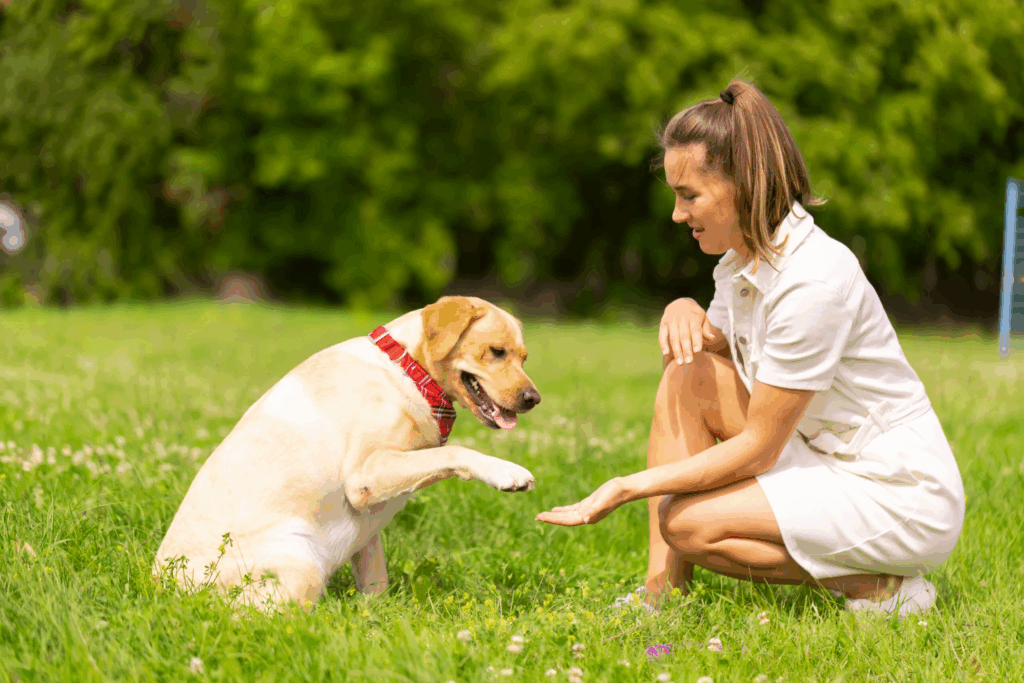
Why Adult Dog Training Actually Works
Adult dogs can learn and they often surprise you.
Here’s why adult dog training works so well:
1. Adult Dogs Can Focus
They’re not distracted by every leaf, bug, or shoelace. That focus speeds up learning.
2. They Have Emotional Control
Puppies act on impulse. Adult dogs pause. That pause is gold for training.
3. Motivation Is Clearer
Food, toys, praise adult dogs know what they like. You can use that.
4. You Can Address Real Problems
Instead of guessing what might be an issue later, adult dog training tackles what’s actually happening now.
Common Myths About Adult Dog Training (Let’s Kill These)
Myth 1: “You Can’t Teach an Old Dog New Tricks”
False. Completely false. Dogs learn through association, not age.
Myth 2: “Bad Habits Are Permanent”
Habits are patterns. Patterns can change.
Myth 3: “Training Takes Years”
Nope. Consistent adult dog training shows improvement in weeks.
Myth 4: “Only Puppies Need Training”
Adult dogs need structure just as much sometimes more.
What Behaviors Can Adult Dog Training Fix?
Common Issues Addressed in Adult Dog Training
- Leash pulling
- Jumping on people
- Excessive barking
- Resource guarding
- Separation anxiety
- Reactivity to dogs or people
- Poor recall
- House rule confusion
And yes, even dogs labeled as “stubborn” can learn. Stubborn usually just means confused or under-motivated.
Adult Dog Training vs Behavior Modification
This part matters.
| Training | Behavior Modification |
| Teaches skills | Changes emotional response |
| Sit, stay, heel | Fear, anxiety, aggression |
| Shorter-term | Longer-term |
| Obedience-focused | Emotion-focused |
Most adult dog training programs blend both. Teaching a dog to “sit” is easy. Teaching them not to panic when the doorbell rings? That’s deeper work and worth it.
How Long Does Adult Dog Training Take?
Honest answer? It depends.
Factors include:
- Dog’s age
- Breed tendencies
- Past experiences
- Consistency at home
- Training method used
Typical Timeline
| Timeframe | What You’ll See |
| 1–2 weeks | Awareness, small changes |
| 3–4 weeks | Improved responses |
| 6–8 weeks | New habits forming |
| 3+ months | Reliable behavior |
Adult dog training isn’t instant. But it’s steady. And progress sticks when done right.
The Science Behind Adult Dog Training
Dogs learn through classical and operant conditioning fancy terms for:
- Association
- Cause and effect
Modern adult dog training uses positive reinforcement, backed by behavioral science.
According to the American Veterinary Society of Animal Behavior, reward-based training is more effective and safer than punishment-based methods
(Source: )
Positive reinforcement builds:
- Trust
- Confidence
- Long-term learning
Punishment builds fear. Fear shuts down learning. Simple as that.
What Makes Adult Dog Training Different From Puppy Classes
Adult dogs come with history.
That history might include:
- Rescue trauma
- Inconsistent rules
- Lack of early socialization
- Reinforced bad habits
Good adult dog training respects that history instead of fighting it.
At PetU, for example, adult training programs are designed around the dog’s real life not textbook scenarios. That personalization makes all the difference.
Essential Skills Every Adult Dog Should Learn
1. Loose-Leash Walking
Because walks shouldn’t feel like a workout.
2. Reliable Recall
Safety first. Always.
3. Calm Greetings
Four paws on the floor. Always.
4. Settle & Relax
An underrated skill. A life-changing one.
5. Impulse Control
Waiting. Pausing. Thinking.
Adult dog training focuses less on tricks and more on livability.
Tools That Help Adult Dog Training (No Gimmicks)
Let’s be practical.
Helpful Tools
- Flat collar or front-clip harness
- High-value treats (real food works best)
- Long leash for recall training
- Clicker (optional, not mandatory)
- Consistent schedule
Avoid:
- Shock collars
- Choke chains
- “Quick fix” promises
If it hurts, scares, or intimidates your dog it’s not training.
Can You Do Adult Dog Training at Home?
Yes. With caveats.
DIY Adult Dog Training Works If:
- Issues are mild to moderate
- You’re consistent
- You follow evidence-based methods
Get Professional Help If:
- There’s aggression
- Fear or anxiety is intense
- You feel stuck or overwhelmed
Working with a certified trainer or structured platform like PetU gives you clarity and accountability two things most owners struggle with.
Real Talk: Training the Human Matters More
Here’s the uncomfortable truth.
Most adult dog training problems aren’t dog problems.
They’re:
- Inconsistent rules
- Mixed signals
- Emotional reactions
- Unrealistic expectations
Dogs learn what works. If pulling gets them where they want to go even sometimes they’ll pull.
Adult dog training is really about changing patterns on both ends of the leash.
A Simple Adult Dog Training Routine (You Can Actually Stick To)
You don’t need hours.
Daily Plan
- 5–10 min morning training
- Reinforce behavior during walks
- Short evening practice
- Reward calm behavior
That’s it.
Consistency beats intensity every time.
Adult Dog Training for Rescue Dogs
Rescue dogs get labeled fast. Too fast.
Adult dog training gives them:
- Predictability
- Confidence
- Clear communication
According to ASPCA, patience and positive reinforcement are critical for helping adult rescue dogs adjust
(Source: )
Most rescue dogs aren’t “broken.” They’re just learning how to feel safe again.
Mistakes People Make in Adult Dog Training
Let’s save you some frustration.
Common Errors
- Expecting overnight results
- Training only during “sessions”
- Ignoring calm behavior
- Being inconsistent with rules
- Giving up too early
Progress in adult dog training is rarely linear. Some days feel amazing. Some feel like setbacks. That’s normal.
FAQs: Adult Dog Training
Is adult dog training effective?
Yes. Adult dogs are capable learners and often respond faster than puppies.
What age is too late for dog training?
There is no age limit. Senior dogs can learn too.
Can adult dogs unlearn bad habits?
Yes. Habits can be replaced with consistent training.
How long does adult dog training take?
Initial changes in weeks. Solid habits in months.
Should I use treats forever?
No. Treats fade. Behavior stays.
Final Thoughts: It’s Not Too Late. Not Even Close.
If you’ve been blaming yourself for “missing the window,” stop.
Your dog doesn’t care about the past. They live in now. And now is the perfect time to start.
Adult dog training isn’t about perfection. It’s about progress.
Calmer walks. Better communication. A dog who understands you and trusts you.
And honestly? That’s worth the effort.If you’re ready to start structured, practical, real-world training, explore resources at PetU and take the guesswork out of it..

Aggressive Dog Training: What Actually Works (And What to Avoid)
Searching for a trusted doggy daycare near me Give your pet a fun safe and caring environment with supervised playtime socialization and proper care throughout
Dog Training Near Me: What Local Trainers Should Really Offer Your Dog
Searching for dog training near me Our expert trainers provide personalized obedience training puppy training and behavior correction programs to help your dog become well

Dog Daycare and Boarding Near Me: One Solution for Busy Pet Parents
Searching for reliable dog daycare and boarding near me We offer safe supervised daycare and comfortable overnight boarding so your pet stays happy healthy and